Key Takeaways
Office Junk Removal San Diego typically covers a walkthrough, lifting and carrying, truck loading, and haul-away for disposal, recycling, or donation when feasible, helping offices clear bulky items without tying up staff. Costs and outcomes can vary by load size, labor time, access logistics, and whether materials like electronics require separate handling.
- Service scope and workflow: Most appointments follow a predictable process—confirm scope and access during a walkthrough, sort items for efficient loading, then haul materials to appropriate facilities, with light sweep-up sometimes available depending on the provider and site rules.
- Pricing depends on volume and complexity: Quotes are typically based on truck space used and labor time, with adjustments for factors like disassembly, multiple floors, elevator waits, long carries, parking restrictions, and special handling for categories such as e-waste.
- Planning and material separation matter: A smoother pickup day usually comes from staging “remove” items clearly, emptying drawers and cabinets, reserving building access, and separating electronics and any confidential materials so they follow the correct handling and disposal workflow.
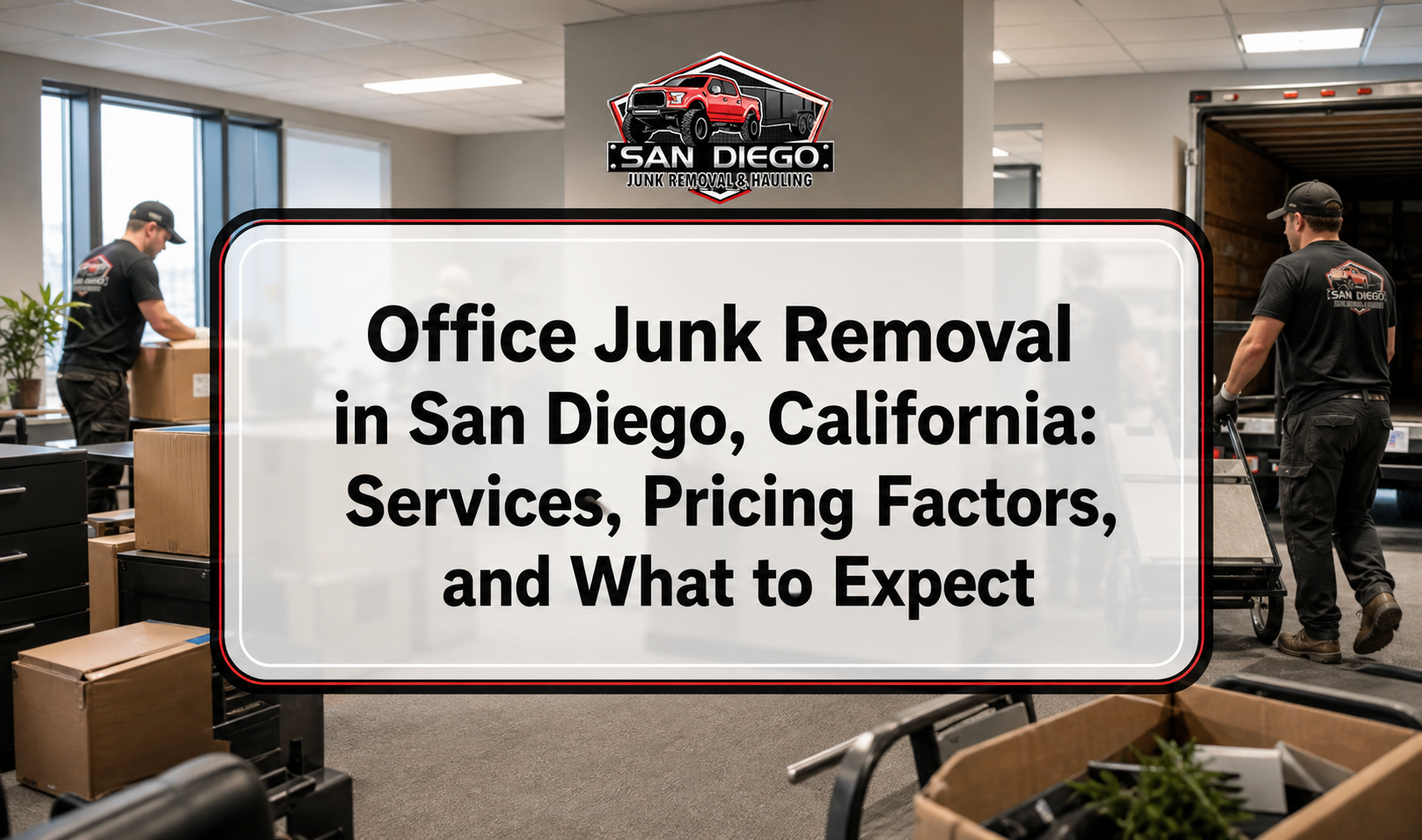
Office Junk Removal San Diego services help businesses clear out unwanted furniture, equipment, and general debris quickly while keeping workspaces safe and functional. In most cases, providers handle lifting, loading, hauling, and disposal, with options for same-day or scheduled pickups depending on availability.
For offices in San Diego, proper removal matters because bulky items like desks, cubicles, and electronics can create trip hazards, block exits, and disrupt day-to-day operations if they linger. Pricing commonly depends on load size or truck space used, labor time, accessibility factors like stairs or long carries, and whether items require special handling such as e-waste recycling or secure document destruction.
This guide covers what’s typically included in an office cleanout, key pricing factors to ask about upfront, and what to expect on pickup day—from on-site estimates and sorting to responsible disposal and recycling where available.
What’s Included in Office Junk Removal San Diego
Most office cleanouts cover the full process from lifting and hauling to responsible drop-off, so your team can stay focused while the space gets cleared. The exact scope can vary by provider, building rules, and the types of items being removed.
A typical office junk removal appointment includes a walkthrough, sorting guidance, labor for moving items out, truck loading, and transport for disposal or recycling. If your office is clearing multiple rooms, it often helps to group items by category (furniture, electronics, mixed trash) so crews can load efficiently and reduce handling time.
- On-site evaluation of what’s being removed and any access constraints
- Lifting, carrying, and careful removal from offices, suites, or shared buildings
- Loading and securing items in the truck to prevent damage in transit
- Haul-away to appropriate facilities (donation where applicable, recycling when available, landfill as needed)
- Light sweep-up of the immediate area after items are removed (availability varies)
When your cleanout overlaps with other projects—like a renovation, tenant turnover, or a larger building refresh—you may also want a broader service such as commercial clean out to handle mixed materials and multiple work areas in a single coordinated removal.
Common Office Items That Can Be Hauled Away
Office junk removal usually covers furniture, fixtures, and general clutter that’s awkward to dispose of through normal building trash service. Items with special recycling or handling requirements (like electronics) should be flagged in advance.
Most providers can remove a wide range of workplace materials, but it’s smart to confirm anything heavy, oversized, or regulated before scheduling. For multi-tenant properties, building management may also have rules about elevator padding, service entrances, and approved hauling times.
Furniture, cubicles, and bulk fixtures
Large items are often the main reason offices hire removal teams, since moving and loading them can take multiple staff members and a suitable vehicle. Disassembly may be available if items can’t fit through doors or elevators.
- Desks, conference tables, credenzas, and filing cabinets
- Office chairs (single items or volume removal)
- Cubicle panels, workstations, dividers, and shelving
- Breakroom furniture, small appliances (confirm acceptance)
Electronics and e-waste
Electronics often require separate handling so they can be recycled through appropriate channels rather than mixed with general debris. If you’re clearing monitors, printers, or networking gear, ask how e-waste is sorted and where it is taken.
- Monitors, desktop towers, laptops, docks, and peripherals
- Printers, copiers, scanners, and fax machines
- Servers, UPS units, and rack equipment (may require extra labor planning)
- Cables and mixed electronic accessories
For offices that need a dedicated electronics stream, consider scheduling E-Waste Removal San Diego so devices are separated from general junk and handled with recycling in mind.
General debris and mixed office clutter
Day-to-day accumulation adds up, especially in storage rooms and supply closets. Mixed loads are common during office relocations or consolidation, but you’ll get the smoothest pickup when boxes are sealed and walkways are clear.
- Bagged trash and non-hazardous debris
- Cardboard and packaging from deliveries
- Outdated signage, décor, and miscellaneous supplies
- Non-confidential paper (bag or box it for faster handling)
Key Pricing Factors to Ask About Upfront
Office junk removal pricing is typically based on how much truck space your load uses and how long it takes to remove, with adjustments for access and special disposal needs. A clear quote depends on accurate item counts, photos, and site conditions.
Because offices vary widely—from ground-floor suites to high-rise buildings—two cleanouts with the same volume can take very different labor time. Before you approve a pickup, it helps to ask how the quote accounts for loading distance, elevator waits, parking restrictions, and any building requirements.
- Volume / load size: How much space your junk takes in the truck (often the biggest factor).
- Labor complexity: Disassembly, heavy lifting, multiple floors, or long carries from suite to truck.
- Access and logistics: Elevator reservations, loading docks, tight hallways, limited parking, or after-hours rules.
- Material type: Some categories may require separate handling (electronics, mattresses, certain construction debris).
- Sorting requirements: If items must be separated into different streams, the job may take longer.
To avoid surprises, clarify whether the quote is a not-to-exceed estimate, whether it can change after loading begins, and what triggers any additional charges. If your office is in a managed building, provide any move-out instructions ahead of time so crews arrive prepared.
Office Cleanout vs. Dumpster/Trailer Rental: Which Makes More Sense?
Junk hauling is usually best when you want everything removed quickly with labor included, while dumpster or trailer rentals can work well for multi-day projects where your team will load over time. The right choice depends on timelines, staffing, and building rules.
Office moves, end-of-lease cleanouts, and sudden downsizing often favor full-service hauling because it reduces disruption and eliminates the need for employees to lift heavy items. On the other hand, if you’re purging gradually while remodeling, a rental can provide steady on-site capacity—as long as your property can accommodate placement and your team can safely load it.
| Option / Scenario | Best Fit | San Diego Planning Considerations |
|---|---|---|
| Full-service office junk removal | Fast clear-outs with lifting, loading, and haul-away handled by a crew | Confirm loading zone access, elevator rules, and whether after-hours work is allowed in your building |
| Dumpster/trailer rental | Multi-day purge or remodel where your team (or contractors) will load over time | Placement may be limited by tight lots or shared parking; ask about driveway/curb placement and any property approval needed |
| E-waste-focused pickup | Large batches of computers, printers, or IT equipment needing separate handling | Ask how devices are separated and transported to recycling channels; plan secure staging for equipment before pickup |
| After-hours cleanout | Offices that must avoid downtime and noise during business hours | Coordinate with property management on freight elevator reservations and noise restrictions |
If you’re leaning toward a rental option, start with Dumpster/Trailer Rental San Diego and confirm what materials are accepted before you schedule delivery.
How to Prepare Your Office for a Smooth Pickup Day
Preparation reduces labor time, protects sensitive information, and helps crews work efficiently—especially in buildings with shared access or strict move policies. A little organization up front can also make your estimate more accurate.
Even when a removal crew does the heavy lifting, the office can speed things up by staging items and clarifying what stays versus what goes. If multiple departments are involved, designate one point of contact for approvals and building coordination.
- Identify “remove” items clearly: Use colored tape or a labeled corner of the office so nothing important is hauled by mistake.
- Back up and wipe devices: For computers and storage media, handle data security internally or confirm whether secure destruction is available through your chosen vendors.
- Empty contents from drawers and cabinets: Loose items slow loading and can spill in hallways or elevators.
- Reserve access: Confirm freight elevator times, dock access, and any required certificates or vendor check-in steps your building requires.
- Plan staging areas: Choose a room or zone near the exit to consolidate items and reduce long carries.
If your cleanout includes a storage or lower-level area, the organizing approach used for home projects still applies—group items, create clear walkways, and label what stays. Many teams find it useful to follow an organization checklist similar to the one described in how to get organized for your basement cleanout in San Diego, then adapt it to office storage rooms and supply closets.
On-Site Process: Estimates, Sorting, and Removal Workflow
Most Office Junk Removal San Diego appointments follow a predictable workflow: confirm scope, set a plan for traffic and staging, then remove and load items efficiently. Knowing the steps helps you schedule around meetings and minimize downtime.
Walkthrough and confirmation
The walkthrough aligns everyone on what will be removed and what must stay, which is especially important in shared spaces. This is the time to mention fragile building finishes, tight corners, and any items that require disassembly.
- Confirm item list and identify anything that needs special handling
- Agree on loading route (hallways, stairwells, elevators, dock)
- Clarify what will be left behind (fixtures, built-ins, tenant improvements)
Sorting and load planning
Sorting impacts both efficiency and disposal outcomes. If electronics, scrap metal, cardboard, and general waste are separated, it can simplify drop-off and reduce the chance of prohibited items contaminating a load.
- Separate electronics into a dedicated area
- Stack furniture in a safe, stable way to prevent tipping
- Box small debris to prevent spills in common areas
Removal, loading, and clean finish
Removal crews typically work from the back of the space forward or from the heaviest items first, depending on access. Once the load is complete, teams often do a quick sweep so the area is ready for your next step (move-in, inspection, or renovation).
- Protect high-traffic corners and doorframes where possible
- Keep fire exits and hallways clear during the process
- Do a final check before the truck departs to avoid accidental removal
Disposal, Recycling, and Donation: What “Responsible” Can Mean
Responsible disposal usually means separating materials when practical and routing them to recycling, donation, or disposal facilities based on condition and acceptance rules. Exact outcomes vary by item condition, local facility requirements, and what’s available on the day of service.
Office cleanouts often include a mix of reusable furniture, recyclable metals, cardboard, and true waste. Because facility rules and accepted categories can change, it’s best to ask your provider how they decide what gets recycled and what must be landfilled, and whether they can provide documentation for certain categories if you need it for internal reporting.
- Donation candidates: Usable desks, chairs, and shelves (condition and demand matter)
- Recyclables: Cardboard, some plastics, and scrap metal when separated cleanly
- E-waste: Devices routed to electronics recycling rather than general waste
- General waste: Mixed debris that cannot be reasonably sorted or reused
At a high level, junk removal and waste handling are part of broader waste collection systems, where materials are aggregated, transported, and directed to various processing or disposal endpoints depending on what they are and how they’re sorted.
Safety and Compliance Considerations for Office Environments
Safety is a major reason businesses hire removal teams: bulky items, awkward lifting, and congested hallways can quickly create injury risks and operational disruptions. A good plan reduces trip hazards, protects building infrastructure, and keeps access routes open.
While most office junk is straightforward, some materials may require extra steps or third-party services. For example, certain types of chemicals, pressurized cylinders, or medical waste are outside the scope of typical junk hauling—if those are present, you’ll need a specialized vendor.
- Data security: Treat hard drives, storage media, and confidential paper as a separate workflow.
- Building protection: Freight elevators, corner guards, and floor protection may be required by property management.
- Hazard screening: Identify anything leaking, sharp, or unknown before crews arrive.
- Occupant safety: Schedule during low-traffic hours if possible to reduce hallway congestion.
When to Schedule Office Junk Removal (and When to Combine Services)
Timing matters: the best cleanouts are planned around lease deadlines, move schedules, renovations, and staff availability. Combining services can reduce repeated handling and keep the site cleaner during transitions.
Consider scheduling removal right after you’ve completed internal sorting and before painters, carpet installers, or movers arrive. If your office is downsizing or consolidating, one well-planned haul-away can be more efficient than repeated small pickups.
- End-of-lease: Clear furniture and debris early enough to address repairs or patching.
- Office relocation: Remove unwanted items before packing to reduce moving volume.
- Renovation: Schedule debris removal as phases finish so materials don’t accumulate.
- Post-incident cleanup: Water-damaged items should be removed promptly if they can’t be salvaged.
If you’re clearing multiple types of material (for example, old carpet, cubicles, and mixed debris), it may be more practical to coordinate a single larger removal window rather than stacking multiple appointments.
Choosing the Right Office Junk Removal Provider in San Diego
The best fit is a provider that can handle your building logistics, item types, and timeline while communicating clearly about what is and isn’t included. Asking the right questions up front is often more valuable than focusing on a single advertised price point.
Before booking, gather a rough inventory and take a few photos—especially of large items and access points. This helps providers anticipate labor needs and reduces the chance of delays on pickup day.
- Do you provide an on-site estimate, and can the price change after loading begins?
- How do you handle electronics and other items requiring separate recycling streams?
- Can you work within property rules (freight elevator scheduling, COI requirements, loading dock access)?
- Is disassembly included for cubicles, large desks, or shelving systems?
- What items are not accepted, and what alternatives do you recommend for those?
A Cleaner Workspace Starts with a Clear Plan
Office Junk Removal San Diego goes more smoothly when you inventory items, coordinate building access, and separate anything that needs special handling like electronics or confidential materials. With the right prep, pickup day can feel less like a disruption and more like a fast reset for your workspace.
Whether you’re clearing a single suite or managing a larger office transition, prioritize safety, confirm disposal pathways, and set expectations about timing and access. A well-organized cleanout helps your business regain usable space quickly—without leaving bulky items lingering in hallways, storage rooms, or parking areas.
Frequently Asked Questions
Ready to Clear Out Your Office Without Disrupting the Workday?
If you’re dealing with bulky desks, cubicles, or aging electronics, scheduling a dedicated pickup can help you reclaim usable space while keeping hallways, exits, and shared areas clear. A quick walkthrough and a clear item list also helps reduce confusion about what stays versus what goes—especially in multi-tenant buildings with elevator and loading rules.
Professional hauling support is useful when access is tight, items are heavy, or you need proper handling for e-waste and other materials that shouldn’t end up in standard trash. Sharing photos and building requirements upfront can make planning smoother and minimize delays on pickup day.