Key Takeaways
An Estate Cleanout San Diego service typically combines sorting, removal, hauling, and responsible disposal or donation so a property can be turned over for sale, renovation, or safe occupancy. Projects run smoother with an on-site walkthrough, a clear “keep” plan, and early coordination for access limits like parking, stairs, elevators, and HOA rules.
- Workflow reduces surprises: Most cleanouts follow a walkthrough, a keep/donate/recycle/dispose sorting plan, removal/load-out with safety focus, and a final look/sweep-out (scope varies by provider) to confirm nothing important was left behind.
- Pricing is driven by scope and access: Costs are typically based on volume removed, labor hours, accessibility (stairs vs. elevators, long carries, limited parking), and whether items require separation for donation, recycling, restricted materials, or landfill disposal.
- Special handling isn’t one-size-fits-all: Electronics, paint, batteries, and other restricted items may require separate routing, and if contamination is suspected (biohazards, pests, water-damaged contents), a junk removal provider may not be a substitute for licensed remediation.
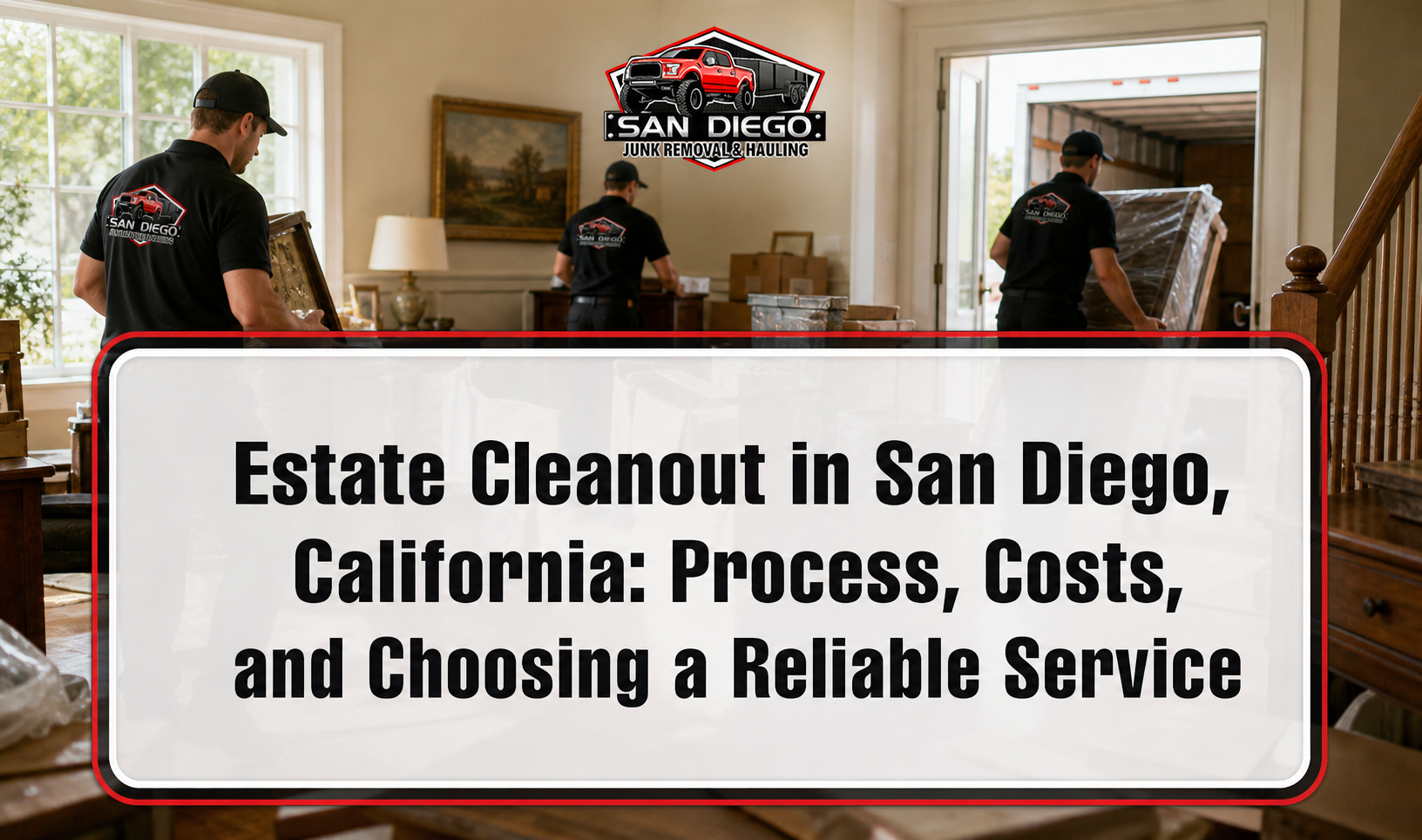
An Estate Cleanout San Diego service typically involves sorting, removing, hauling, and properly disposing of or donating household contents from a home, condo, or apartment after a move, death in the family, or property sale. In San Diego, the process often includes planning around tight parking, HOA rules, elevator reservations, and local disposal requirements for bulky items, appliances, and electronics.
Cleanouts matter because they can affect property timelines, safety, and compliance—especially when dealing with heavy furniture, sharp debris, biohazards, or hoarded materials that require protective equipment and careful handling. Costs are usually driven by volume, labor hours, accessibility (stairs vs. elevators), and whether items must be separated for donation, recycling, or landfill disposal.
This guide breaks down the typical cleanout workflow, what impacts pricing, and how to choose a reliable provider, including what to ask about insurance, disposal practices, and on-site estimates before work begins.
What an Estate Cleanout in San Diego Typically Includes
An Estate Cleanout San Diego project usually covers everything needed to clear a property efficiently—sorting, lifting, hauling, and responsible disposal—so the home can be sold, rented, renovated, or returned to a safe, livable condition.
While every household is different, most estate cleanouts follow a similar pattern: identify what stays, what goes, and what needs special handling (donations, recycling, hazardous items). In San Diego, the work often needs to account for parking access, multi-story buildings, gated communities, elevator scheduling, and neighborhood noise/working-hour rules.
- Room-by-room removal of furniture, bagged trash, and loose household items
- Sorting for donation, recycling, resale, and landfill (when applicable)
- Loading and hauling (including stairs, tight hallways, or long carry distances)
- Sweep-out of cleared areas (varies by provider; confirm scope)
- Separation of restricted materials such as paint, chemicals, batteries, and e-waste
Step-by-Step Cleanout Workflow (From Walkthrough to Final Sweep)
Most estate cleanouts move faster and with fewer surprises when the project is planned in phases: an on-site walkthrough, sorting plan, removal day(s), and a final check to confirm nothing important was left behind.
1) Pre-cleanout planning and on-site walkthrough
A walkthrough helps set expectations for timeline, access, staffing, and what will be donated, recycled, or disposed of.
For estates, it’s common for family members or an executor to be coordinating remotely, so photos, a written scope, and a clear “keep list” can prevent mistakes. If the property is in a condo or apartment, planning may also include reserving a loading zone, confirming elevator rules, and confirming where trucks are allowed to stage.
- Identify “do not remove” items (documents, jewelry, heirlooms, photos)
- Call out high-risk areas (attic pull-down stairs, crawl spaces, garages)
- Confirm parking/loading logistics and any HOA or property management rules
- Flag heavy or specialty items (pianos, safes, appliances)
2) Sorting: keep, donate, recycle, dispose
Sorting reduces unnecessary disposal and helps protect valuables from being hauled away with general junk.
If you’re short on time, a practical approach is to mark rooms or corners with simple labels, then prioritize removal of obvious trash and broken items first. For households that have been lived in for decades, expect mixed-content boxes, “memory items,” and paperwork that requires slower, more careful decision-making.
- Keep: legal documents, photos, keepsakes, titles, medical records
- Donate: usable furniture, clothing, kitchenware (confirm donation acceptance rules)
- Recycle: clean cardboard, scrap metal, some electronics (where accepted)
- Dispose: soiled textiles, damaged particleboard furniture, contaminated items
3) Removal and load-out (labor and safety focus)
Removal is where most time and cost occur—especially with stairs, long carries, oversized furniture, or densely packed rooms.
Crews may need dollies, lifting straps, furniture sliders, and protective equipment to prevent injuries and property damage. If the estate includes a garage full of mixed items, expect more sorting time, more trips to the truck, and a higher chance of restricted materials that require separate drop-offs.
- Protect high-traffic pathways (corners, stair rails, flooring) when needed
- Remove large items first to open space for safer movement
- Consolidate loose items into bags/boxes to reduce handling time
- Stage donation and recycling separately to avoid mix-ups
- Perform a room-by-room “final look” before the last load leaves
4) Disposal, donation drop-offs, and documentation
Disposal is not one-size-fits-all; different materials may need different destinations, fees, or handling procedures.
Waste is generally handled through established systems of collection, transport, and processing, which is the core idea behind waste collection. If you have items like TVs, computers, batteries, or paint, ask how they’ll be routed—some providers separate them for appropriate recycling or household hazardous waste drop-off, while others may require you to handle those items separately.
- Ask how appliances and electronics are handled (recycling vs. disposal)
- Confirm whether donation drop-offs are included or billed separately
- Request clear communication for any “found items” (cash, jewelry, documents)
What Impacts Estate Cleanout Pricing in San Diego
Cleanout costs are typically driven by how much is being removed, how difficult it is to remove, and how many categories of disposal are required.
Because homes can vary from lightly furnished to fully packed with decades of belongings, estimates often rely on volume (how much truck space) and labor time rather than a flat rate. Access constraints—like third-floor walk-ups or limited parking—can increase labor hours even when volume is moderate.
- Volume: more cubic yards/truck space generally increases cost
- Weight and density: books, tile, and construction debris are heavier than household clutter
- Labor hours: sorting, bagging, and disassembly adds time
- Accessibility: stairs, long distances, tight elevators, narrow driveways
- Special handling: e-waste, appliances, sharp debris, potential biohazards
- Timeline: short-notice or multi-day coordination may affect scheduling
| Cleanout Factor | How It Affects Scope | San Diego Access Considerations |
|---|---|---|
| Stairs vs. elevator | More labor time, more careful maneuvering for bulky furniture | Elevators may require reservations; stairs may limit large-item removal angles |
| Parking and truck staging | Longer carry distances can slow the load-out | Dense neighborhoods and condos may restrict loading zones or time windows |
| Donation and recycling separation | Sorting increases time but can reduce landfill disposal | Confirm what local donation partners accept (condition requirements vary) |
| Restricted items (e-waste, paint, batteries) | May require separate handling and drop-offs | Ask whether these items are accepted and how they’re routed |
| Heavy/specialty items (pianos, safes, appliances) | May require additional labor, equipment, or disassembly | Hallway turns, older staircases, and tight doorways can affect feasibility |
Common Items and How They’re Usually Handled
Estate cleanouts often involve a mix of everyday household junk and a few categories that need special routing, prep, or safety precautions.
When you know what’s in the property ahead of time, you can reduce delays by setting aside restricted items and clearly labeling what must remain. If you’re uncertain, take photos of garages, patios, closets, and utility areas—those spaces tend to hide the items that trigger extra steps.
Furniture and bulky household items
Bulky items are typically straightforward to remove, but tight spaces can require disassembly or extra labor to prevent damage.
- Sectionals, sleeper sofas, and large dressers may be dismantled to fit through doorways
- Water-damaged or pet-soiled upholstered items usually cannot be donated
- Outdoor furniture may include rusted metal or broken glass that needs careful handling
Appliances and scrap metal
Appliances may be recyclable, but some units need extra steps (like draining, disconnecting, or safe transport).
Refrigerators and freezers can be heavy and awkward, and access limitations matter more than people expect—especially in condos with narrow corridors. If appliances are part of the cleanout, consider bundling removal with a dedicated service like Appliance Removal San Diego when you want the scope to be crystal clear.
Electronics (e-waste)
Electronics often require separate handling due to recycling requirements and data security concerns.
- Set aside computers, hard drives, phones, printers, and cables
- Ask about data-destruction expectations if devices may contain sensitive information
- Confirm whether TVs and monitors are accepted and where they go
Paperwork, photos, and valuables
Estates frequently contain important documents mixed into drawers, books, and boxes, so a slow first pass can prevent costly mistakes.
If multiple family members are involved, decide in advance who has authority to make “keep vs. toss” calls. A simple approach is to designate one table or bin as the “review later” zone and keep it separate from hauling traffic.
- Check file cabinets, desk drawers, book pages, and closet boxes
- Keep a dedicated container for keys, titles, and mail
- Do a final walkthrough with cabinet doors and drawers opened
Special Situations: Hoarding, Biohazards, and Water-Damaged Contents
Some properties require more than standard hauling—especially when there’s mold risk, pest issues, sharps, or heavily compacted clutter that makes movement unsafe.
In these cases, it’s important to be candid during the walkthrough so the crew can plan protective equipment, additional labor, and appropriate disposal routing. If contamination is suspected, a junk removal provider may not be a substitute for licensed remediation; the right next step depends on what’s present and how widespread it is.
- Hoarding conditions: may require staged removal (clear paths first, then rooms)
- Biohazard risk: pet waste, used sharps, or bodily fluids may require specialized handling
- Water-damaged items: can become heavy, unstable, and difficult to bag safely
- Pests: droppings and nesting materials can raise health concerns
Choosing a Reliable Estate Cleanout Provider
The best provider for an Estate Cleanout San Diego job is the one that matches your property’s constraints, communicates clearly, and can explain how items will be handled from removal through disposal.
Because estate work is time-sensitive and emotionally difficult, reliability and process matter as much as price. A clear written estimate, defined scope, and documented plan for donations and restricted materials can prevent misunderstandings.
Questions to ask before scheduling
Good questions uncover whether the provider has a repeatable process for multi-room cleanouts and whether the quote includes the tasks you expect.
- Is the estimate based on volume, labor time, or both?
- What is included: sorting, bagging, disassembly, sweeping?
- How do you handle electronics, paint, batteries, and other restricted items?
- Can you accommodate stairs, elevator bookings, or limited parking?
- Are you insured for property damage and worker injuries?
- How are donations handled, and do you need items pre-separated?
Red flags to watch for
Estate cleanouts move quickly, which makes unclear pricing and vague disposal practices riskier than usual.
- Refusal to provide an on-site walkthrough for a full-home cleanout
- Vague answers about where items go or how restricted items are handled
- Unclear scope (for example, “we’ll take most of it” without specifics)
- Pressure to decide immediately without time to review the estimate
How to Prepare the Property to Save Time (and Reduce Mistakes)
A few simple prep steps can reduce labor hours and help ensure valuables and documents aren’t accidentally removed.
If you only do one thing, create a clearly labeled “keep” area and remove those items from the work zones before the crew arrives. If multiple people are making decisions, align on what “donate” means (some families want donation-worthy items separated; others prefer everything removed except keepsakes).
- Set aside a “keep” room or closet and mark it clearly
- Collect keys, garage remotes, and access codes for gates/buildings
- Photograph rooms and closets before work starts (useful for remote decision-makers)
- Unplug small appliances and clear counters if you want faster kitchen removal
- Point out fragile items, tight corners, or flooring you’re worried about
If the estate includes storage-like areas (garage, basement, shed), a simple organizing plan can help. For example, using a quick zone method—trash, donate, keep, and “review”—can make the project smoother, especially when paired with guidance like how to get organized for your basement cleanout in San Diego.
Getting the Home Ready for Sale, Renovation, or Turnover
After the cleanout, the next steps typically focus on presenting a safe, empty property—whether that’s for listing photos, repairs, or a handoff to property management.
Depending on the home’s condition, you may need follow-on services such as deep cleaning, minor repairs, paint, flooring replacement, or yard cleanup. If the home is being listed, coordinate cleanout timing with the agent’s photo schedule and any contractor walkthroughs so the property isn’t blocked by remaining items.
- Do a final walkthrough with the executor/family member before locking up
- Check drawers, shelves, closets, and cabinets for overlooked documents
- Confirm garage rafters, attic spaces, patios, and sheds are fully cleared
- Plan for donation receipts if you’re tracking donations for estate records (when applicable)
Frequently Asked Questions
Ready to Clear the Property Without Guesswork?
If you’re coordinating an estate cleanout, the hardest part is often avoiding surprises—missed valuables, access restrictions, and items that require special disposal. A clear plan and an on-site walkthrough can help you confirm what stays, what goes, and how the load-out will work with stairs, elevators, parking, or HOA rules.
Working with a local team can also reduce delays by keeping sorting and hauling organized, separating donation and recycling when appropriate, and flagging restricted materials like electronics, paint, or batteries before removal begins.