Key Takeaways
A Garage Cleanout San Diego service typically restores a usable garage by sorting items, hauling away what’s leaving, and doing a basic sweep-out. What it costs and how smoothly it runs largely depends on volume, access, and whether anything requires special handling or separate drop-off.
- Typical Service Scope: Most appointments include an on-site walkthrough, sorting into “keep/donate/recycle/dispose” when feasible, lifting and loading (including bulky items), haul-away to appropriate facilities, and a final sweep to remove loose debris.
- Pricing and Timeline Drivers: Quotes usually reflect volume, weight/density, labor complexity (stairs, tight access, long carries, disassembly), and sorting needs, so two similarly “full” garages can still vary significantly in time and cost.
- Disposal Limits and Special Items: San Diego disposal realities matter because restricted materials—like paints, solvents, pesticides, propane cylinders, certain batteries, and electronics—may be excluded from standard loads and can require separate handling or drop-off, so identifying them during the walkthrough helps prevent delays and re-trips.
Garage Cleanout San Diego services typically involve sorting, hauling, and properly disposing of unwanted items so a cluttered garage can be safely used again. Costs and timelines depend on the volume of material, how accessible it is, and whether items require special handling, such as e-waste, paints, solvents, or bulky furniture.
In San Diego, cleanouts often require planning around disposal rules for hazardous household waste and electronics, since many items can’t go in standard trash pickup. A thorough cleanout also reduces safety risks like blocked walkways, unstable stacks, and exposure to dust, pests, or sharp debris—issues that are common in long-neglected storage areas.
This guide explains the typical process from on-site assessment to loading and cleanup, what affects pricing, and what to expect on service day, including how donations, recycling, and disposal are usually handled.
What a Garage Cleanout in San Diego Typically Includes
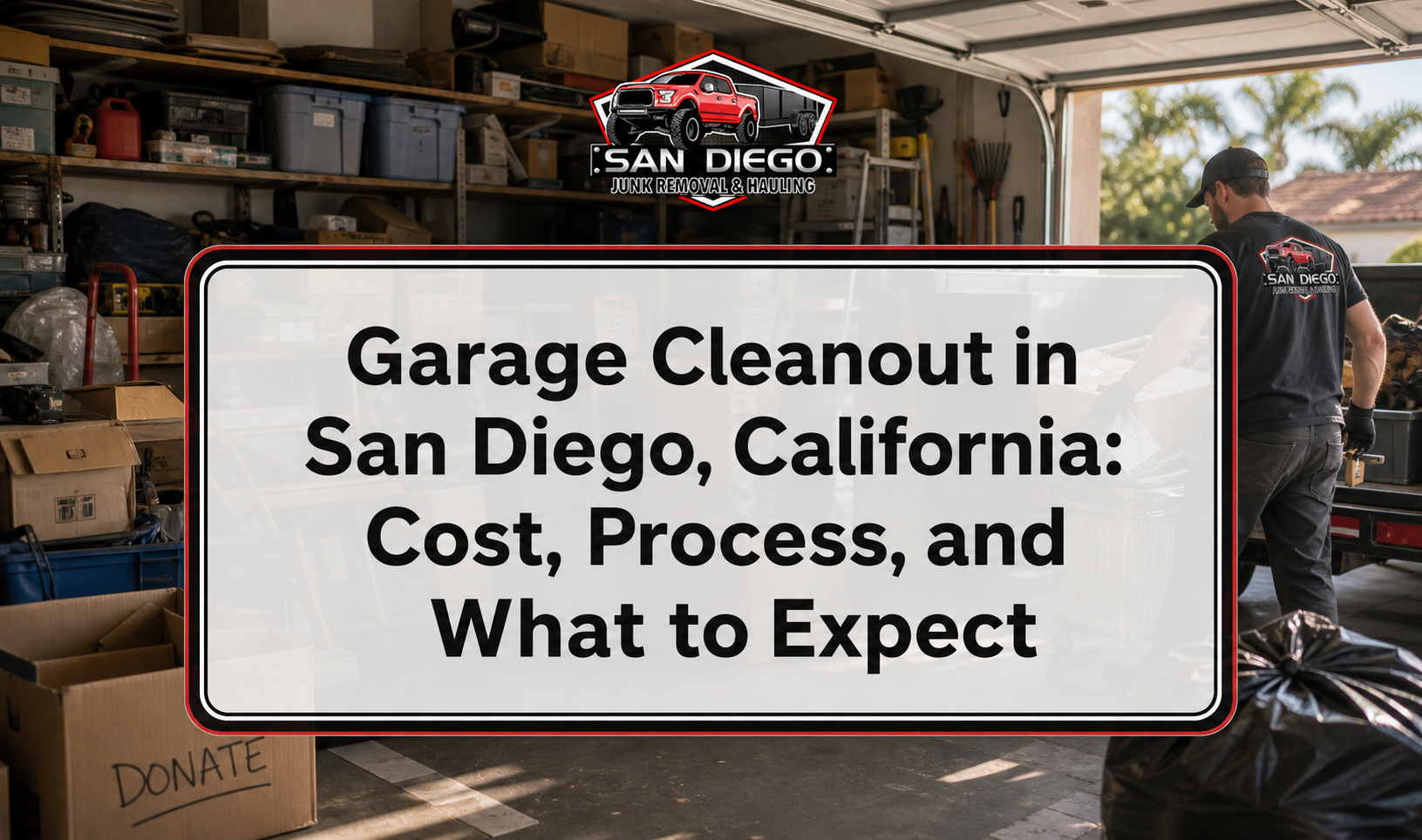
A professional Garage Cleanout San Diego appointment usually covers sorting, lifting, loading, hauling, and a final sweep-out so the space is usable again. The exact scope depends on what’s in the garage and whether any items need special disposal or recycling.
Most cleanouts start with a quick walk-through so the crew can understand volume, access, and safety issues. From there, they’ll set aside items you want to keep, identify anything that can be donated or recycled, and remove the rest for proper disposal.
- On-site assessment and work plan (what stays, what goes, what needs special handling)
- Sorting and staging items (often into “keep,” “donate,” “recycle,” and “dispose” piles)
- Heavy lifting and safe load-out (including bulky, awkward items)
- Hauling and facility drop-offs (transfer station, recycler, donation center when feasible)
- Basic cleanup (sweeping and removing loose debris after load-out)
If you’re coordinating multiple areas beyond the garage, a broader cleanout may be a better fit than a single-service visit. For example, if overflow items are also in closets or a storage room, a residential home clean out can be more efficient than piecemeal pickups.
Step-by-Step: How the Cleanout Process Works on Service Day
Most garage cleanouts follow a predictable sequence—confirm what’s leaving, clear paths, load efficiently, then do a final pass for missed items and floor debris. Clear communication upfront helps prevent accidental removal of “keep” items.
1) Pre-arrival prep (what you can do in 10–20 minutes)
A little prep can reduce confusion, speed up the job, and protect important items. Even if you don’t have time to sort, labeling helps.
- Move vehicles out of the garage and driveway if possible.
- Set aside valuables, documents, keepsakes, and anything sentimental.
- Mark “do not remove” zones with tape or signs (or designate a keep corner).
- Unlock side gates and remove obstacles that block access.
- Take quick photos of items you’re unsure about (helpful for donation decisions later).
2) On-site walkthrough and sorting plan
The crew typically confirms which items are junk, which should be kept, and which may require special disposal. This is the moment to flag paint cans, chemicals, batteries, and electronics.
Garages often contain mixed material piles (cardboard, scrap wood, old furniture, yard tools, and broken appliances). A good workflow keeps “clean recyclables” separate from contaminated trash to avoid paying disposal fees on items that could have been recycled.
- Identify hazards (sharp metal, broken glass, nails/screws, pest activity)
- Confirm what items are excluded or need separate handling
- Plan the load-out order (bulky items first, loose debris last)
3) Safe removal, loading, and haul-away
Loading is usually the most labor-intensive phase and where safety matters most. Crews typically use dollies, lifting straps, and team carries to reduce injury risk and prevent property damage.
Access affects speed: a clear driveway and wide path to the truck is faster than navigating tight side yards, stairs, or long carries from detached garages. If your garage has overhead storage racks or a loft area, let the crew know—items stored overhead can require ladders and extra time.
4) Final sweep-out and confirmation
After loading, the crew will often do a final scan for missed items and sweep loose debris from the floor. Before they leave, do a quick walk-through to confirm everything you wanted removed is gone and everything you wanted kept remains.
- Confirm the “keep” pile is intact.
- Check corners, behind doors, and along walls for small leftover items.
- Ask where items are going (recycle/donate/dispose) if you have preferences.
What Impacts Pricing for Garage Cleanout San Diego Services
Pricing usually reflects volume, labor time, disposal requirements, and access conditions. The fastest way to get an accurate quote is to share photos or schedule an on-site estimate when the job is large or complicated.
Because each garage is different, it’s normal for costs to vary even between similarly sized spaces. Two garages may both look “full,” but one might be mostly light cardboard while the other contains dense materials (tile, concrete rubble, old appliances) that cost more to handle and dump.
- Volume: how much space the items take in the truck or trailer
- Weight and density: heavy materials can increase disposal and labor needs
- Labor complexity: disassembly, stairs, tight access, long carry distances
- Sorting needs: mixed loads vs. pre-sorted piles
- Special items: electronics, mattresses, appliances, and materials requiring separate processing
- Time sensitivity: same-day or urgent scheduling may be limited by availability
When comparing quotes, ask what’s included: labor, loading, haul-away, disposal fees, and whether sweeping is part of the service. Clear scope prevents surprises—especially when hazardous household waste is involved, since many hauling services cannot legally transport certain materials.
Handling Common Garage Items: Donate, Recycle, Dispose
A cleanout goes smoother when items are routed correctly—usable goods to donation, recyclables to appropriate facilities, and true waste to disposal. Some categories (like e-waste and chemicals) require extra planning.
Items often accepted for donation (if clean and usable)
Donation guidelines vary by organization, and not everything can be accepted. When in doubt, take photos and confirm requirements before setting items aside.
- Working tools and hardware sets
- Clean, intact furniture
- Sporting goods
- Boxed household goods in good condition
- Working small appliances (varies by donation center)
Materials commonly recyclable
Recycling depends on condition and local facility rules. Keeping recyclables dry and separated from food waste or liquids improves acceptance.
- Cardboard and paper (clean and dry)
- Metal items and scrap (separate when possible)
- Certain plastics (facility-dependent)
- Green waste (bagged or bundled based on hauler requirements)
If you’re trying to divert as much as possible from the landfill, consider services focused on recovery and diversion, such as green recycling junk removal.
Items that may require special handling
Some garage items can’t go into standard trash because of fire risk, environmental harm, or facility restrictions. These materials are common in San Diego garages, especially where DIY projects or home maintenance supplies have accumulated.
- Paint, stains, solvents, pesticides, and unknown chemicals
- Propane cylinders and fuel containers
- Car batteries and rechargeable batteries
- Electronics (TVs, monitors, computers, printers)
- Fluorescent tubes and certain bulbs
For electronics specifically, an e-waste removal service can simplify compliance by routing devices to appropriate recycling channels.
San Diego Disposal Realities to Know Before You Book
San Diego-area disposal rules and facility policies can affect what a hauler can take in one trip. Knowing what’s in your garage—especially hazardous waste—helps avoid delays and re-trips.
Many cleanout loads are accepted at waste collection facilities, but restricted items may be refused or require separate drop-off. Waste collection, in general, involves more than just “dumping it”—items may be sorted, transferred, processed, or restricted based on safety and environmental rules.
For a general overview of how waste collection works as a system, see waste collection.
| Item Category | Typical Cleanout Handling | Planning Notes (San Diego Area) |
|---|---|---|
| Cardboard, paper, packaging | Recycling when clean/dry; otherwise disposal | Keep dry and separate from liquids to improve recyclability. |
| Furniture and bulky items | Haul-away; donate if usable; dispose if damaged | Narrow paths, stairs, or tight garages can increase labor time. |
| Appliances | Separate handling; recycle components where possible | Confirm whether doors must be taped shut and whether any fluids or refrigerants are present. |
| Electronics (e-waste) | Divert to e-waste recycling streams | Plan data wipe for computers/phones before removal when possible. |
| Paints, solvents, pesticides | Often excluded from standard loads; may require separate drop-off | Don’t assume these can be hauled; ask in advance about hazardous household waste options. |
Safety and Damage Prevention in a Cluttered Garage
Garage cleanouts can involve sharp debris, unstable stacks, and hidden hazards, so safety planning is part of a quality service. Reducing risk protects both people and property during removal.
Garages often accumulate nails, broken tools, and scrap metal—items that can puncture tires and cause injury. There’s also a higher chance of pest droppings or moldy boxes in coastal and canyon-adjacent neighborhoods, so minimizing dust and avoiding direct contact with contaminated materials matters.
- Clear a path first: open a safe walkway from garage to driveway.
- Stabilize stacks: remove top-heavy piles before pulling items from the bottom.
- Use proper PPE: gloves and closed-toe shoes are essential; masks help with dust.
- Watch for sharps: wrap or box sharp metal and broken glass before moving.
- Flag unknown containers: unlabeled liquids should be treated cautiously and identified before transport.
If you suspect extensive mold, rodent contamination, or chemical leakage, consider pausing the cleanout until you’ve identified a safe handling plan. In some cases, specialized remediation (not standard junk hauling) may be needed before contents can be moved safely.
Junk Hauling vs. Dumpster/Trailer Rental for Garage Cleanouts
Junk hauling is typically faster and more hands-off, while dumpster or trailer rental can be better when you want to load at your own pace. The right choice depends on how quickly you need the garage cleared and how much labor you want to do yourself.
When full-service hauling is a better fit
Choose hauling if you want the job done in one visit, especially when heavy lifting, stairs, or bulky items are involved.
- You need the garage cleared the same day for parking, inspections, or a move
- Items are heavy (appliances, old furniture, scrap piles)
- You want help sorting and loading
- You’re concerned about injury risk or property damage
When renting a dumpster or trailer makes sense
Rental can be a good option if you’re doing a multi-day cleanout or remodeling project and can load gradually.
- You plan to sort over several days (keep/donate/sell)
- You’re doing DIY demolition or ongoing decluttering
- You have space to place a trailer/dumpster and can manage loading
If you’re weighing rental logistics and restrictions, this resource can help: considerations for dumpster rental for junk disposal in San Diego.
How to Get Better Results (and a Faster Cleanout)
A few practical choices can reduce labor time and help ensure items are diverted properly. The biggest improvements usually come from access, labeling, and pre-separating special items.
- Make “keep” unmistakable: use bins, tape, or a separate room so nothing is taken by mistake.
- Pre-pull restricted items: set aside paint, solvents, batteries, and e-waste for separate handling.
- Group like items together: cardboard in one stack, metal in one pile, donatables in one area.
- Break down boxes: flattened cardboard loads more efficiently.
- Tell the crew about anything hidden: items behind shelving, in attic access corners, or under tarps.
If you want a simple, structured approach before booking service, follow a garage workflow like “clear a path, sort into zones, and remove in layers.” A step-by-step organizing method can make decision-making easier: 4 steps to easy garage cleaning in San Diego.
Getting Your Garage Back to “Usable” After the Junk Is Gone
A successful cleanout doesn’t end at an empty floor—it ends with a setup that prevents re-cluttering. Simple storage planning and maintenance habits keep the garage functional long-term.
Once the space is cleared, take a few minutes to define how you want to use it: parking, workshop area, seasonal storage, or a mix. Then rebuild storage intentionally rather than refilling every wall with “maybe someday” items.
- Create zones: tools, sports gear, holiday storage, household overflow, and recycling.
- Use clear, labeled bins: reduces “mystery box” accumulation.
- Keep the floor open: wall racks and shelving reduce trip hazards.
- Set a 15-minute reset: once a month, walk through and remove new clutter.
If the garage cleanout revealed that items have spread into other areas of the home, consider pairing the reset with a broader declutter plan so “garage overflow” doesn’t simply relocate to another room.
Frequently Asked Questions
Ready to Clear the Garage Without the Guesswork?
If your garage has turned into a mix of bulky items, boxed clutter, and hard-to-dispose materials, a planned cleanout can help you regain usable space quickly and safely. Reaching out early also helps you confirm what needs special handling—like electronics, batteries, or old paint—so there are no surprises on service day.
San Diego garage cleanouts often come down to access, volume, and proper disposal. Getting a quick assessment and clear scope can protect “keep” items from accidental removal and ensure everything is routed appropriately for donation, recycling, or disposal.