Key Takeaways
Appliance Removal San Diego services typically handle lifting, loading, hauling, and routing large appliances toward recycling, reuse, donation when accepted, or disposal, with scope varying by access and disconnection needs. A smooth pickup usually comes down to confirming what’s included, preparing the unit safely, and communicating appliance type and location upfront.
- What Full-Service Removal Usually Covers: Providers commonly remove appliances from inside homes, apartments, and light commercial spaces and may do limited basic cleanup, but documentation/receipts and disconnection policies vary by company.
- Special Handling and Safety Limits: Refrigerators/freezers may require special handling due to refrigerants, and gas or hardwired appliances should be disconnected correctly (often by a qualified professional) to avoid leaks or electrical hazards, with many teams requiring units to be fully disconnected before pickup.
- Cost and Scheduling Drivers: Pricing is usually influenced by appliance type and quantity plus labor factors like stairs, tight turns, long carries, parking/loading constraints, and whether draining or other preparation is needed, so accurate booking details help reduce day-of surprises.
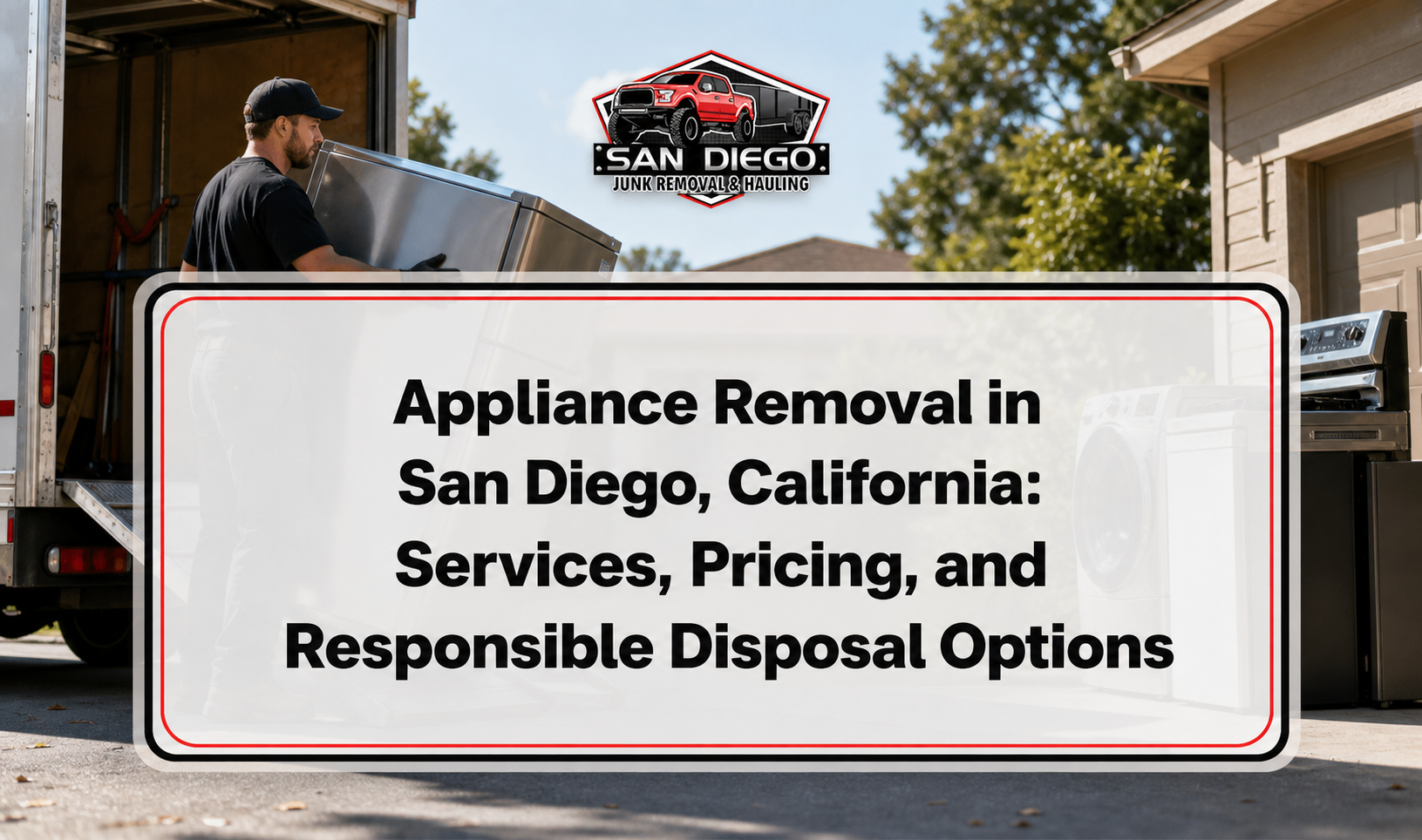
Appliance Removal San Diego services help residents and property managers haul away large household appliances and ensure they’re handled through appropriate reuse, recycling, or disposal channels. Most providers can remove refrigerators, washers, dryers, ovens, dishwashers, and water heaters from homes, apartments, and commercial spaces, often with options for same-day or scheduled pickup.
Pricing commonly depends on the appliance type, quantity, ease of access (stairs, tight hallways, or disconnect needs), and whether the unit must be safely prepared for transport. For example, refrigerators and freezers may require special handling because they can contain refrigerants, while gas appliances should be disconnected by a qualified professional to prevent leaks. Responsible removal also matters because metals and components are often recyclable, and some items may qualify for donation if they’re working and clean.
This guide covers typical service options, what affects cost, how to prep appliances for pickup, and practical ways to choose responsible disposal in San Diego without risking safety issues or improper dumping.
What “Appliance Removal” Typically Includes in San Diego
Appliance Removal San Diego services usually cover lifting, loading, hauling, and routing appliances to the most appropriate next step—recycling, reuse, donation (when accepted), or disposal. The goal is to remove bulky items safely without damaging walls, flooring, or entryways.
Most providers can remove common household and light commercial appliances from garages, kitchens, laundry rooms, patios, and utility areas. In many cases, removal teams will carry the item from wherever it sits and navigate stairs or tight turns, but the scope can vary if disconnection, special equipment, or multiple trips are required.
- In-home pickup and carrying (including stairs when feasible)
- Loading and transport
- Basic site cleanup after the appliance is removed (sweeping small debris may be limited)
- Sorting for recycling/reuse when possible
- Documentation or receipts when required by property managers (availability varies)
Appliances Commonly Accepted (and Why Some Need Special Handling)
Most haul-away crews can take standard appliances, but certain categories require extra precautions due to refrigerants, gas connections, weight, or bulky dimensions. When scheduling, it helps to name the appliance type and note whether it’s freestanding, built-in, or partially enclosed.
Kitchen Appliances
Kitchen appliance removal often includes refrigerators, freezers, ovens, stoves, microwaves, and dishwashers, but built-ins may require more prep. Accessibility—such as narrow cabinet openings or upper-floor kitchens—can influence time and labor.
- Refrigerators and freezers (often treated as special items due to refrigerants)
- Ranges/ovens (electric or gas—gas should be safely shut off/disconnected first)
- Dishwashers (may require disconnecting water supply and drain line)
- Microwaves (countertop or over-the-range units may involve unmounting)
Laundry Appliances
Washers and dryers are generally straightforward to remove, but stacked units or tight laundry closets may add complexity. Teams may ask that the units be disconnected and drained before arrival.
- Top-load and front-load washers (water lines should be turned off)
- Electric dryers (unplugging is typically sufficient)
- Gas dryers (gas disconnect should be handled by a qualified person)
Water Heaters and Utility Equipment
Water heaters can be heavy and may still contain water, so they’re often priced differently or require extra labor. If a unit is hard-piped, strapped, or installed in a cramped closet, prep work can reduce delays.
- Tank water heaters (draining beforehand often helps)
- Tankless units (may be wall-mounted and require safe disconnection)
- Furnace/boiler-related components (availability varies by provider)
What Affects the Cost of Appliance Removal
Pricing for Appliance Removal San Diego is usually based on the type and size of the appliance, labor time, and logistical factors like stairs or long carries. The more accurate your details during booking, the fewer surprises on pickup day.
Because providers use different pricing models (per-item vs. volume-based vs. labor/time), the best way to compare is to describe the same scope to each provider and ask what’s included. If you’re removing more than one item, bundling can be more efficient than booking multiple single pickups.
- Appliance category: Refrigerators/freezers and water heaters commonly require more careful handling.
- Quantity: Multiple appliances may reduce the per-item cost compared with single-item trips.
- Access: Stairs, elevators, long hallways, gated entries, or tight turns can increase labor time.
- Disconnection needs: If a unit is still connected to water, gas, hardwiring, or venting, you may need to prep it in advance.
- Condition and preparation: Units with doors removed/secured and interiors emptied are quicker to load.
- Parking and loading zone: Limited curb access or long-distance loading can add time.
How to Prepare Appliances for Pickup (A Simple Checklist)
Basic prep helps avoid safety hazards, prevents leaks, and speeds up the removal. If you’re not comfortable disconnecting an appliance—or if it involves gas or hardwiring—hire a qualified professional before the hauler arrives.
Before the Team Arrives
A few quick steps make removal safer and reduce the chance of property damage. If you’re in an apartment or managed building, confirm service elevator rules and pickup windows ahead of time.
- Empty the appliance: Remove food, clothing, racks, and loose shelves where possible.
- Unplug and secure cords: Tape cords to the unit to prevent tripping.
- Defrost fridges/freezers: If time allows, defrost and towel-dry to reduce water dripping.
- Shut off water lines: For washers, dishwashers, refrigerators with ice makers, and water heaters.
- Drain when necessary: Drain washers and water heaters as appropriate.
- Clear a path: Move rugs, furniture, and decor from hallways and doorways.
- Protect surfaces (optional): Consider cardboard or a drop cloth on delicate flooring.
Safety Notes for Gas and Hardwired Appliances
Gas appliances and hardwired units should be disconnected correctly to prevent leaks or electrical hazards. If the provider does not perform disconnections, schedule a plumber/electrician to handle it first.
- Do not attempt to disconnect gas lines if you’re unsure how to shut off and cap them safely.
- Hardwired appliances may require breaker shutoff and proper electrical disconnection.
- If you smell gas, stop and contact your gas utility or a qualified technician before proceeding.
Recycling, Reuse, and Disposal: What Responsible Removal Looks Like
Responsible appliance haul-away focuses on routing materials to reuse and recycling whenever possible. Many appliances contain metals and components that can be recovered, while certain items (like refrigerators) may require specialized handling.
When an appliance is still functional and clean, donation may be an option, but acceptance depends on the charity’s rules, age/condition limits, and whether they can test the unit. If donation isn’t possible, recycling is typically the next-best route, especially for metal-heavy appliances.
- Reuse: Working appliances may be reused or resold if accepted by local organizations or secondary markets.
- Recycling: Metal parts and some components can be processed through recycling channels.
- Proper disposal: When reuse/recycling isn’t feasible, disposal should follow local facility requirements.
Appliance removal is part of the broader system of waste collection, where safe handling and correct routing help reduce illegal dumping and recover materials that still have value.
Special Considerations for Refrigerators and Freezers
Refrigerators and freezers often require special handling because they may contain refrigerants and compressors that must be managed appropriately. These units are also heavy and awkward to maneuver, especially from upper floors or tight kitchens.
When booking, tell the provider whether the fridge is standard, oversized, built-in, or located in a garage or backyard. Also mention if doors need to be removed to fit through narrow openings—some providers can do this, but it may add time.
- Confirm whether the provider accepts refrigerant-containing appliances
- Measure doorways and tight turns to avoid last-minute complications
- Defrost in advance when possible to reduce water mess
- Secure doors for transport (or remove them if required for safety)
Apartment, HOA, and Property-Manager Scheduling Tips
Multi-unit buildings often add timing, access, and compliance constraints. Planning around elevator reservations and loading zones can prevent rescheduling fees and reduce onsite delays.
Property managers and landlords may also need photo documentation, COI requirements, or specific pickup times. Since these requirements vary by building and provider, clarify them before booking and share any written rules with the removal team.
- Reserve service elevators and confirm protective padding requirements
- Ask about parking needs for the hauling vehicle
- Confirm whether appliances must be staged curbside or can be removed from inside
- Provide gate codes and contact details for onsite access
- Schedule during permitted noise/loading hours if your HOA has restrictions
DIY Drop-Off vs. Full-Service Removal: A Practical Comparison
Some residents can self-haul small appliances, but full-size units are often better handled by a removal team due to weight and transport challenges. The right choice depends on your vehicle access, lifting help, and whether disconnection is already completed.
| Option / Scenario | Best Fit | What to Verify in San Diego |
|---|---|---|
| Full-service in-home appliance removal | Heavy appliances, stairs, tight hallways, or when you want labor included | Whether disconnection is included; access rules for apartments/HOAs |
| Curbside pickup (if offered) | You can move the appliance safely to an accessible pickup point | Placement rules for sidewalks/alleys; scheduled window and no-show policies |
| DIY self-haul to a facility | You have a truck/trailer, straps, and enough help to lift and load | Facility acceptance rules (especially for refrigerators/freezers); safe tie-down requirements |
| Donation attempt first | Working, clean appliances that meet a charity’s acceptance criteria | Whether the organization tests/accepts your appliance type; pickup availability |
| Bundle with a larger cleanout | You’re removing appliances plus other bulky items at the same time | Truck space planning and what items are restricted (e-waste, hazardous waste, etc.) |
Choosing the Right Removal Option for Your Project
The “best” appliance removal approach depends on how many items you’re clearing, how fast you need it done, and whether the job includes other junk. If you’re already doing a larger reset—like clearing storage spaces—combining services can simplify scheduling.
When you’re removing appliances along with other clutter, it may make sense to coordinate with a broader cleanout plan. For ideas on sorting and staging items efficiently, see how to get organized for your basement cleanout in San Diego.
- Single appliance swap: Schedule a focused pickup and confirm disconnection requirements.
- Move-out / turnover: Combine appliances with furniture and trash removal to reduce trips.
- Renovation: Plan removal before demo begins so appliances aren’t in the way.
- Estate or downsizing: Identify donation candidates first; remove the rest in one coordinated haul.
Related Services That Pair Well with Appliance Haul-Away
Appliance removal often happens alongside cleanouts, remodel prep, or move-outs. Bundling can reduce scheduling friction and keep the property safer and clearer while you work.
If you’re clearing more than appliances—such as old shelving, boxes, or damaged belongings—consider pairing the job with Junk Hauling & Removal San Diego so everything can be handled in one visit.
- Garage and storage decluttering before replacing a washer/dryer
- Kitchen refreshes where multiple appliances are being removed
- Tenant turnovers where leftover items include furniture and trash
- Post-renovation cleanup when old fixtures and debris need hauling
A Simple Plan for Stress-Free Appliance Removal
Most appliance pickups go smoothly when you confirm access, complete disconnections safely, and communicate the appliance type and location upfront. A little prep reduces delays and helps ensure the unit is routed responsibly.
- Inventory what’s going: List appliance types, sizes, and where they’re located (upstairs, garage, backyard).
- Decide on routing: Identify anything that might be donated; everything else should be set for recycling/disposal.
- Handle disconnections: Arrange qualified help for gas or hardwired appliances if needed.
- Prep the pathway: Clear obstacles, measure tight exits, and protect floors if necessary.
- Confirm pickup details: Parking, gate codes, elevator rules, and time windows for San Diego properties.
When you take these steps, Appliance Removal San Diego becomes a quick, predictable task—whether you’re swapping one refrigerator or clearing multiple units from a rental, remodel, or commercial space.
Frequently Asked Questions
Schedule Appliance Removal in San Diego Without the Heavy Lifting
If you’re dealing with a refrigerator swap, a tenant turnover, or a remodel, arranging appliance haul-away can save time and prevent damage to walls, floors, and tight doorways. Clear details upfront—appliance type, location, stairs, and whether it’s disconnected—help you get a smoother pickup and avoid day-of surprises.
Appliances can be awkward, heavy, and sometimes connected to water, gas, or electrical lines, so it’s worth confirming safe disconnection and access before anyone starts moving it. For a straightforward next step, request a pickup plan that fits your building rules, parking limits, and timeline.